Build Computational Autonomy for Indigenous Public Health
Instituto Dourados develops the scientific, computational, and organizational capacity needed for Indigenous communities to guide their own public health futures.
We translate basic research into practical tools for public health planning by combining epidemiology, quantitative social science, computational modeling, and long-term community partnerships. Our work emphasizes computational autonomy: communities should be able to own, operate, and improve the scientific infrastructure they rely upon.
We believe sustainable public health depends on strengthening local capacity rather than long-term dependence on external or expensive resources. To support this vision, we develop open-source software and sustainable computing systems that communities can operate, maintain, and improve themselves.
Modern science, artificial intelligence, and the technology industry are built upon an enormous foundation of open-source software. Just as industrial economies depended upon access to transportation networks and energy resources, meaningful participation in today’s computational economy depends upon access to this shared digital infrastructure.
Instituto Dourados helps communities participate in the global open-source ecosystem not only as users, but also as contributors, innovators, and leaders.
We believe Indigenous communities should have equal opportunity to build scientific software, computational infrastructure, and new technologies that reflect their own priorities, while contributing back as leaders in the global scientific and technological software ecosystem.
Foundations
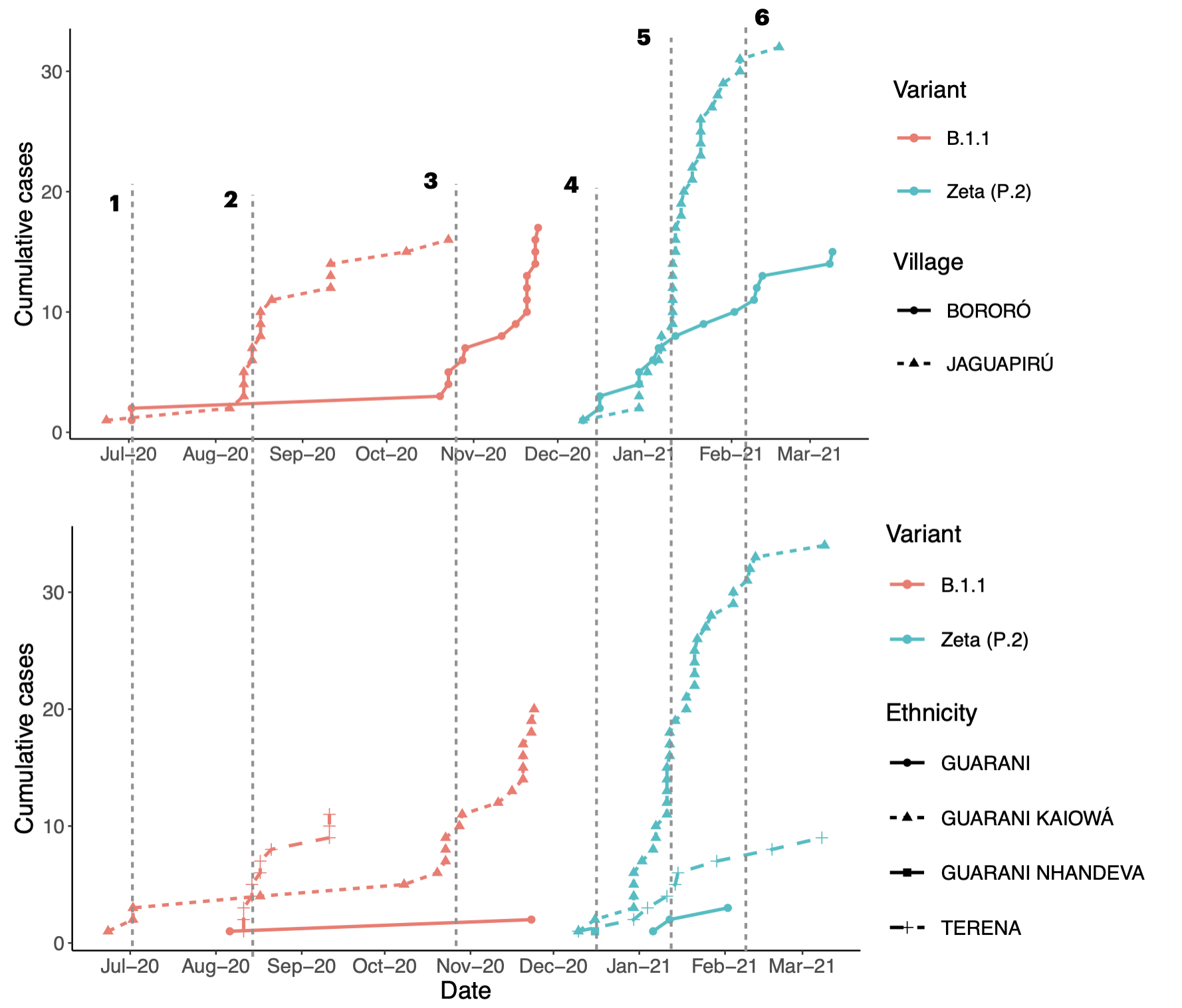
Our work builds on a long standing collaboration in the Dourados Indigenous Reserve. During the COVID-19 pandemic, Dr. Rezende and collaborators developed epidemiological information systems to track the arrival and spread of SARS-CoV-2 variants within the Reserve (Simionatto et al. 2020; Oliveira et al. 2023).
That work demonstrated the importance of understanding local social structure for public health planning. Instituto Dourados extends this foundation by developing computational methods that help communities anticipate future outbreaks, evaluate intervention strategies, and adapt these approaches to Indigenous communities throughout Brazil and beyond.
The Dourados Indigenous Reserve
The Dourados Indigenous Reserve is located in the state of Mato Grosso do Sul in southwestern Brazil, adjacent to the city of Dourados. The Reserve lies within a region shaped by long histories of Indigenous settlement, displacement, and state-led reservation policies that brought multiple Indigenous peoples together in a shared territory.
Today, approximately 18,000 people live in the Reserve’s two villages, Bororó and Jaguapiru. The population includes members of several Indigenous peoples, with the Guarani Kaiowá and Terena comprising the largest communities.
The Reserve is both the home of our collaborators and the place where our research is developed and evaluated in partnership with the local community.
Understanding Disease Transmission
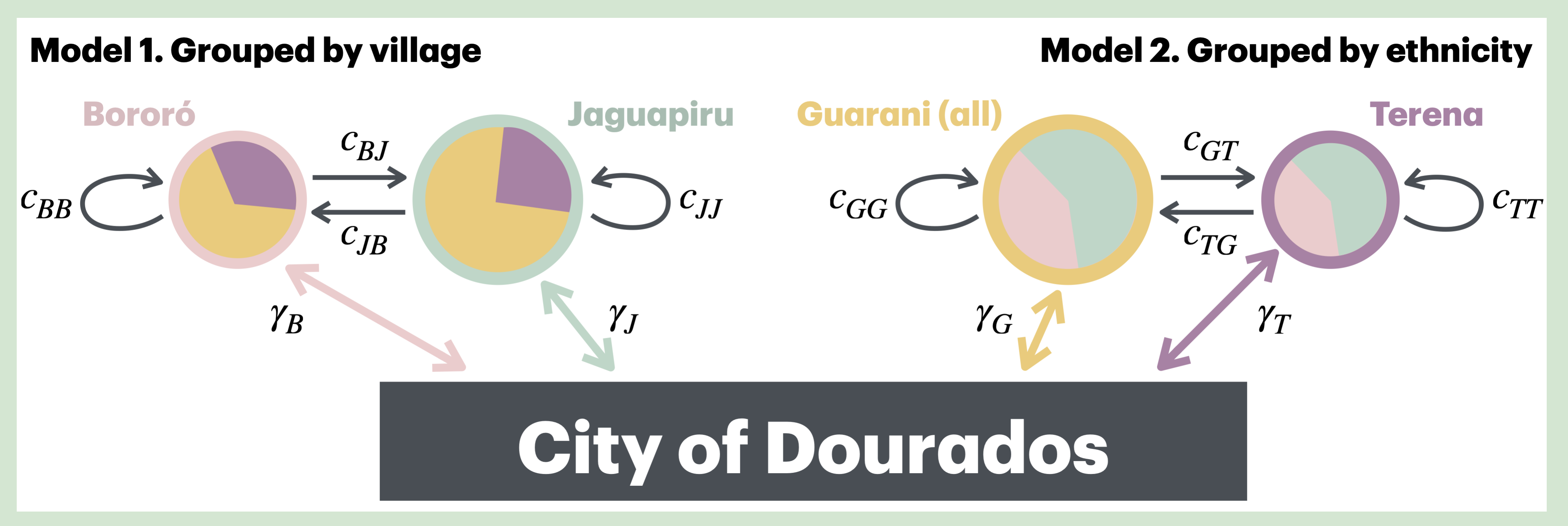
Disease transmission depends not only on biology, but also on how people live, work, travel, and interact. We combine epidemiology with quantitative social science to understand how social structure shapes the spread of infectious diseases.
Our current research asks several questions:
- Which social groupings (village, ethnicity, or village × ethnicity) best explain observed transmission patterns?
- How important is travel to the city in introducing new variants?
- Under what conditions does reinfection substantially alter epidemic dynamics?
Computational Public Health
Understanding disease transmission is only the first step. Our goal is to translate scientific understanding into practical decision-support tools for communities and public health professionals.
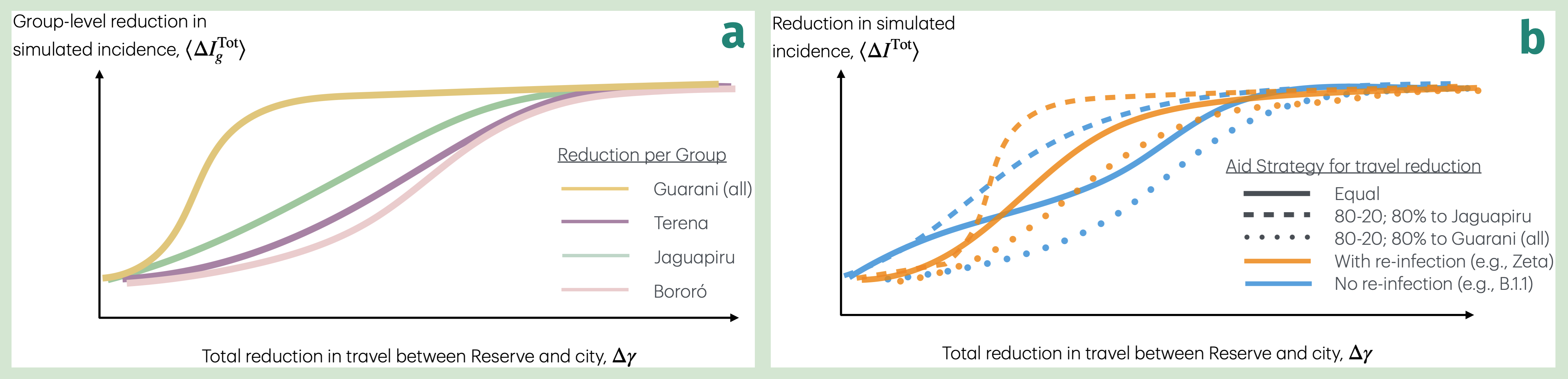
We develop computational models that allow alternative intervention strategies to be explored before future outbreaks occur. These models help evaluate how limited resources can be allocated to reduce disease transmission while balancing efficiency, equity, and local priorities.
Long-term Vision
Our long-term vision is to build a vibrant community of Indigenous and non-Indigenous partners, faculty, students, and researchers working together to advance Indigenous public health through open science and computational autonomy.
By combining community partnerships, sustainable computing infrastructure, and open-source scientific software, we aim to create public health systems that communities can understand, govern, and improve themselves.
We believe this integration of field research, computational science, and local ownership offers a durable foundation for Indigenous public health in Brazil and beyond.